
 United States
 United Kingdom
 Canada
 Australia
 New Zealand
 Ireland
Harry Litman examines Miller's prior-approval rule for White House lobbyists
The Talking Feds host reads the reported memo as a move to concentrate power, not simply tighten meeting rules.
 Talking Feds with Harry Litman
Story of
Why this story? The video opened at a pace of 421,257 views a day, 4.3 times a normal first day on this channel (98,827).
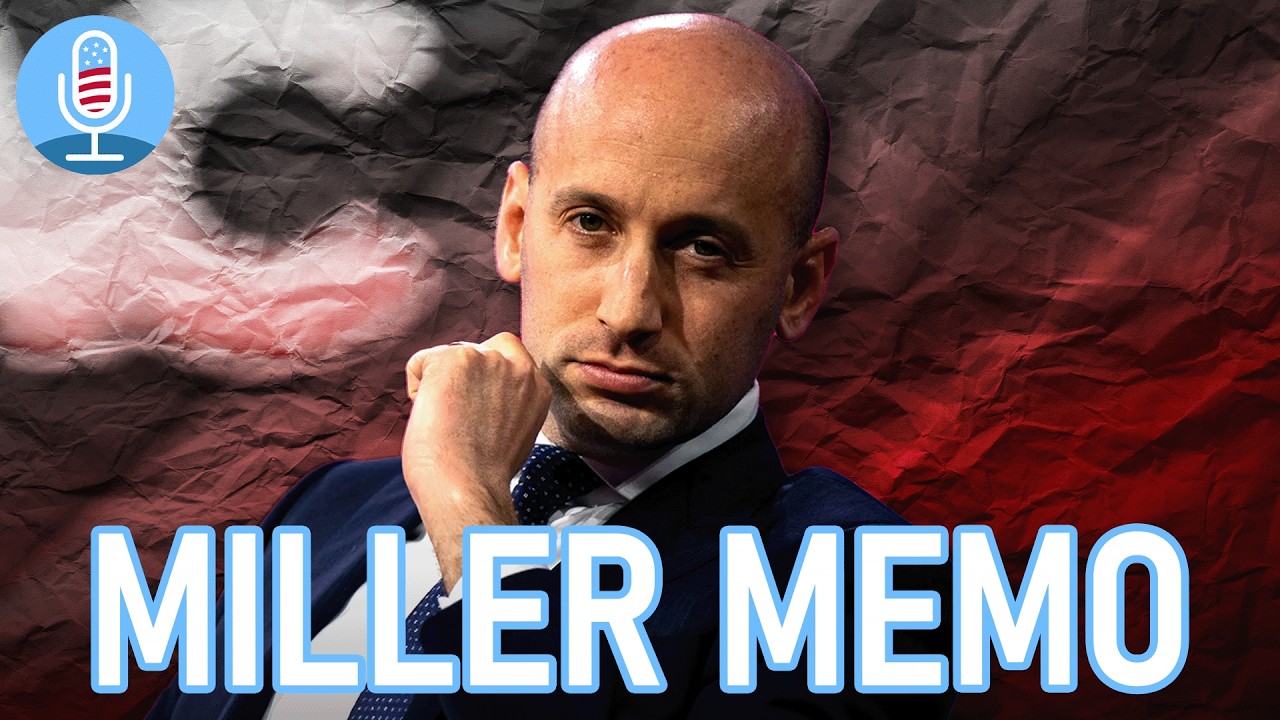 LEAKED Stephen Miller Memo UPENDS Key White House Policy
Next story: Talking Feds follows the midterms from ballot counts to courtrooms
Things we can learn from the video
Press to jump
- 0:00Litman describes a reported requirement for prior approval of White House meetings with lobbyists.
- 3:25He considers how the approval requirement affects cabinet officials' interactions with outside lobbyists.
- 5:15He compares prospective congressional investigations with the work of the January 6th Committee.
- 8:50Litman concludes that Miller is positioning himself as a primary power center within the administration.
Access requires permission. Harry Litman opens his latest Talking Feds commentary with a reported change to White House lobbying meetings: officials must get prior approval before meeting lobbyists.
"Lobbyists are no longer supposed to meet with people in the White House unless there is prior approval," he says. The memo comes from Stephen Miller, who became White House chief of staff after Susie Wiles's departure.
Litman's central question is what that requirement actually accomplishes. A stricter approval process might sound like a restraint on lobbying. His reading is different: he argues that Miller is making himself the central authority over access to the administration.
The video drew roughly 169,000 views in seven hours, already comfortably beyond the channel's usual full-day audience of about 99,000 for regular videos. Its title, "LEAKED Stephen Miller Memo UPENDS Key White House Policy," promises an operational change, and Litman identifies the approval requirement at the outset rather than saving it for later.
From there, he considers the implications for cabinet officials' contact with outside lobbyists and for relations with Congress. The latter part turns to prospective congressional investigations, with the January 6th Committee serving as his comparison. By the close, his argument is about who controls access and how that concentration of authority could shape the administration's response to oversight.
An American political adviser who has been White House chief of staff since November 9, 2026. He also serves as homeland security adviser.
More on Wikipedia ›An American Republican political consultant and lobbyist who was White House chief of staff from 2025 to 2026, becoming the first woman in that role.
More on Wikipedia ›Published on Trari
Where next?


What do you think?
Want to know when somebody answers you?
 Is this your channel?For the channel's owners and team: a ready picture and text for your audience
Share the story with your audience. Everything is ready:
For an Instagram story or a WhatsApp status
For a community post or your channel's description
- Subscribers
- 481,000 ▲ 2,000 this week
- Channel views, last 7 days
- 3,002,204
- Channel views, pace per day
- 250,395 (on a normal day: 392,942)
- Video published
- November 14, 2026
- Video views so far
- 168,980 (less than a day online)
- Video views, pace per day
- 421,257
The numbers
The memo commentary passed Talking Feds' usual first-day view count within its opening seven hours.

💡 Test your knowledge
In which department did Harry Litman serve as a deputy assistant attorney general?
Litman served as a deputy assistant attorney general at the Department of Justice before becoming a familiar legal commentator.