
 United States
 United Kingdom
 Canada
 Australia
 New Zealand
 Ireland
Iraq deploys forces to Jurf al-Sakhar and bars politicians from entering
A panel weighs whether the deployment marks a break with Kata'ib Hezbollah or a routine rotation under state command.
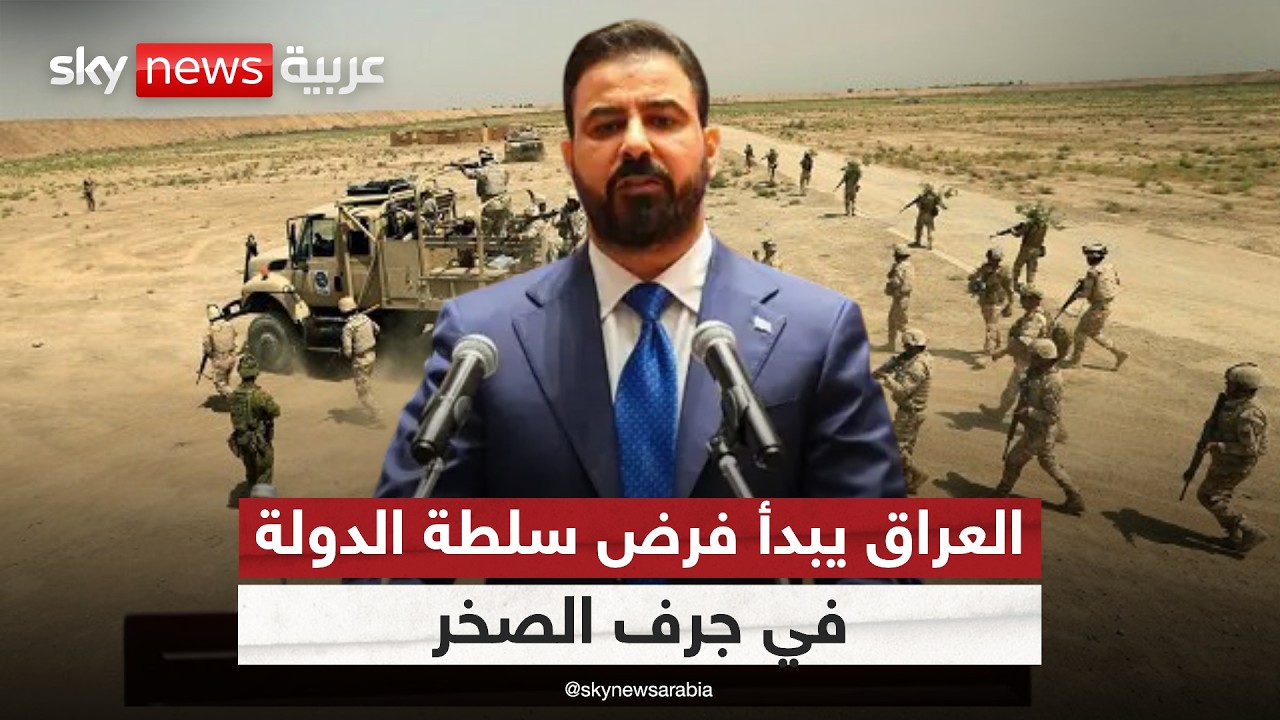 العراق يتحرك لفرض سيطرته على جرف الصخر.. لماذا منع الزيدي السياسيين من دخولها؟| #ستوديو_وان_مع_فضيلة
Up nextTrari.com home page ›


 Arab worldStory of
Why this story? One of سكاي نيوز عربية's most watched videos since yesterday, with 218,035 views.
سكاي نيوز عربية: An Arabic news channel broadcasting from Abu Dhabi since 2012. 7.4M subscribers and 4B views.
2 more stories on Jurf al-Sakhar armed faction withdrawal deadline ›
Iraqi forces have begun deploying in Jurf al-Sakhar, southwest of Baghdad, after the government opened a military command center in the area, the United Arab Emirates-based broadcaster Sky News Arabia reports. Prime Minister al-Zaidi also ordered politicians not to enter the area or hold meetings there. Baghdad had already announced a deadline for armed factions to withdraw. The question now is what changes on the ground when government forces move in.
The Studio One episode, "العراق يتحرك لفرض سيطرته على جرف الصخر.. لماذا منع الزيدي السياسيين من دخولها؟| #ستوديو_وان_مع_فضيلة" ("Iraq moves to assert control over Jurf al-Sakhar: Why did al-Zaidi bar politicians from entering?"), shows military convoys, command meetings and checkpoints. The broadcaster says the deployment includes the army, the Counter Terrorism Service, federal and energy police, and two brigades from the Popular Mobilization Forces. That umbrella organization is formally part of Iraq's armed forces and includes Kata'ib Hezbollah, the Iran-backed Iraqi faction whose influence in the area is at issue.
Analyst Sarmad al-Bayati said the entry ban was meant to keep politicians from exploiting the deployment for their own gain. He also argued that the reported one-month grace period for armed groups to leave was too long and risky. Ibrahim al-Sarraj, who heads the Baghdad Forum for Writers and Political Analysts, disputed the premise of an ultimatum. He described the movement as a routine rotation of units under official command, not a factional withdrawal. Writer Rusli al-Maliki, by contrast, called the deployment a move to assert government authority after 12 years and argued that factions were trying to stall the withdrawal.
A report within the episode traces the dispute from reports of oil smuggling to the arrival of government forces and what it describes as mediation by Iranian Quds Force commander Esmail Qaani. Joining from Tehran, political scientist Ahmed Mahdi pointed to Iran's support for Iraq against the Islamic State group and denied that Tehran controls Iraqi factions. Al-Maliki also cited unconfirmed reports of executions before the forces arrived. Al-Sarraj denied that there had been secret prisons in Jurf al-Sakhar.
A small town in Iraq’s Babil province, about 60 kilometers southwest of Baghdad. Most of its former residents are now refugees in other Iraqi towns and cities.
More on Wikipedia ›An umbrella group for Iraqi paramilitary forces. It is formally part of Iraq’s armed forces and reports directly to the prime minister.
More on Wikipedia ›An Iraqi Shia paramilitary group under the command of Iran’s Islamic Revolutionary Guard Corps. It operates three brigades within Iraq’s Popular Mobilization Forces.
More on Wikipedia ›An Iranian brigadier general who leads the Quds Force, the branch of Iran’s Islamic Revolutionary Guard Corps that conducts operations abroad. He took command after Qasem Soleimani was killed in January 2020.
More on Wikipedia ›Published on Trari.com
Go back to Trari.com home page
Where next?
All stories on Jurf al-Sakhar armed faction withdrawal deadline ›
Things we can learn from the video
Press to jump
- 0:51Footage shows convoys, checkpoints and command meetings as Iraqi security forces enter Jurf al-Sakhar.
- 4:45Sarmad al-Bayati argues that the reported month-long grace period for armed groups to leave is too risky.
- 7:46Ibrahim al-Sarraj describes the deployment as a routine rotation under state command rather than an ultimatum.
- 20:00Al-Bayati says the prime minister barred politicians to keep them from using the deployment for political gain.
- 25:34A report traces the dispute from reports of oil smuggling to the deployment and Esmail Qaani's reported mediation.
- 32:13Ahmed Mahdi denies that Iran controls Iraqi factions.
What do you think?
Want to know when somebody answers you?
- Channel
- سكاي نيوز عربية
- Subscribers
- 7,420,000 ▲ 10,000 this week
- Channel views, last 7 days
- 12,972,997
- Channel views, pace per day
- 1,980,535 (on a normal day: 1,818,704)
- Video published
- November 20, 2026
- Video views so far
- 218,035 (less than a day online)
- Video views, pace per day
- 285,429
The numbers
The episode drew about 218,000 views since yesterday, the most among new videos from the leading Arab-world news channels.

💡 Test your knowledge
In which city was political scientist Ahmed Mahdi when he joined the panel?
Mahdi joined the panel from Tehran to discuss Iran's perspective on the deployment.
