
 United States
 United Kingdom
 Canada
 Australia
 New Zealand
 Ireland
Microsoft explains the materials behind its "1,000x" quantum claim
The Majorana 2 explainer details a new chip recipe, while viewers ask what the hardware can actually calculate.
 Microsoft
Story of
Why this story? The video opened at a pace of 134,083 views a day, 30 times a normal first day on this channel (4,439).
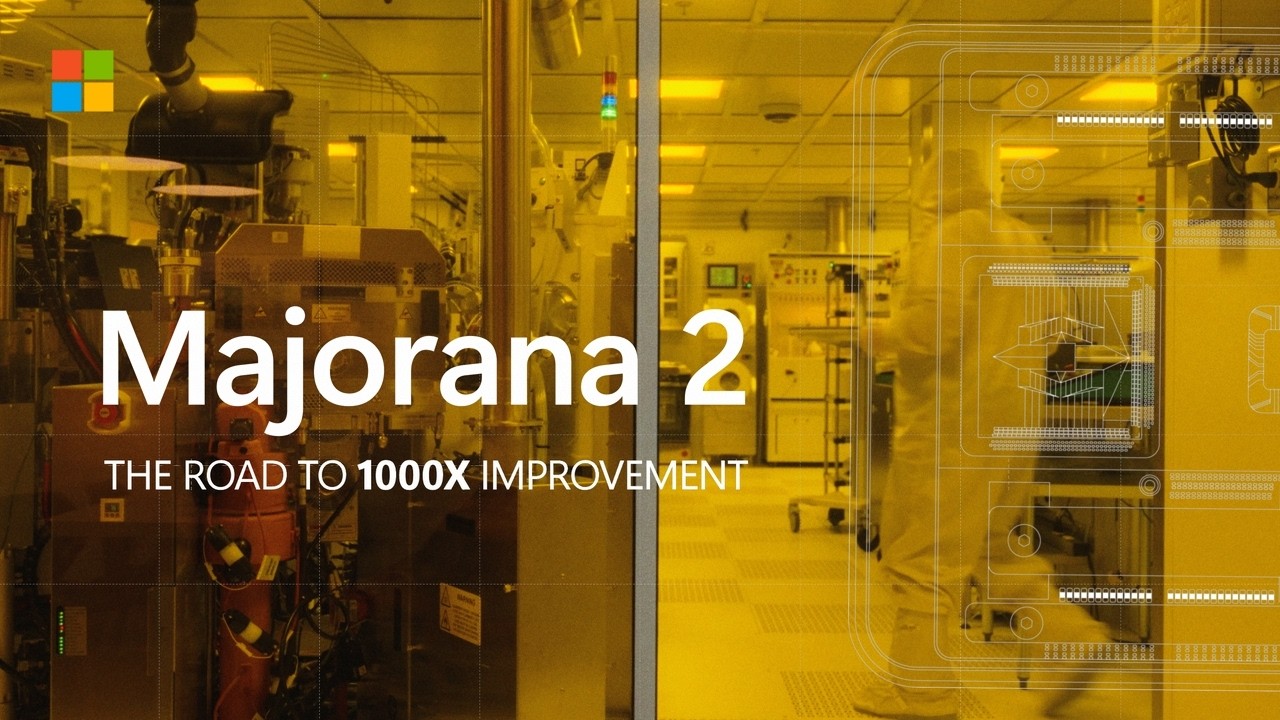 Majorana 2 Explained: The road to 1000x improvement
Next story: Microsoft's Azure case study follows the work behind targeted cancer care
Things we can learn from the video
Press to jump
- 0:46Nayak says replacing aluminum with lead and adding antimony underpin Microsoft's claimed thousandfold improvement in hardware stability.
- 1:47Troyer explains how longer-lived qubits could allow tens of millions of operations before errors.
- 3:03Baker introduces software tools for developing quantum programs and estimating the computing resources they require.
- 3:41The researchers describe using quantum calculations in chemistry and materials science, including supplying answers for AI models.
- 5:40Nayak welcomes scientific skepticism and says scrutiny of the team's published results supports its findings.
- 6:38Microsoft targets 2029 for scaled, practical quantum computers capable of tackling previously unsolved problems.
The materials have changed. Microsoft quantum researcher Chetan Nayak describes the change plainly: "We replaced aluminum with lead, and we introduced antimony into the semiconductor."
That is the concrete starting point for "Majorana 2 Explained: The road to 1000x improvement," a company-produced explainer about its quantum processor. Microsoft says the new material stack makes its quantum hardware a thousand times more stable than its predecessor. The claim concerns stability, not a blanket promise that a computer runs every task that much faster.
Matthias Troyer explains why stability matters: a qubit needs to maintain its quantum state long enough for calculations to happen. He connects the longer lifespan to the possibility of performing tens of millions of operations before errors. Nathan Baker then widens the picture beyond the chip, introducing software tools and describing how quantum calculations could supply answers for AI models working on chemistry and materials.
The video drew about 71,000 views in nine hours, a much faster start than Microsoft's usual uploads. In the comments, a recurring question is more immediate than the long-term possibilities: what computations has Majorana 2 actually performed? Others ask how AI might help shorten the development timeline.
Nayak addresses scientific scrutiny directly, calling skepticism an important part of science and saying examination of the team's published results supports its findings. But the practical machines remain a goal in his account: Microsoft is targeting 2029 for quantum computers capable of solving some previously unsolved problems.
Published on Trari
Where next?


A professional in this field? Want to write about Tech on Trari? Tell us ›
What viewers say
There is no explanation in this video what Majorana 2 has done. Is it a functional quantum computer? What calculations has it done? This video seems to be all about the future.
@dang5469See it on YouTubeI'm hoping the timeline for scaling to utility scale quantum computer is a conservative estimate. A.i. is advancing fast. Hopefully, A.i. can help speed this up.
@oker59See it on YouTubeWe had gta6, starship catch up and now Majorana 2. What a month!
@Julien-hu4ccSee it on YouTube
Public comments from the video's page on YouTube
Want to know when somebody answers you?
 Is this your channel?For the channel's owners and team: a ready picture and text for your audience
Share the story with your audience. Everything is ready:
For an Instagram story or a WhatsApp status
For a community post or your channel's description
- Channel
- Microsoft
- Subscribers
- 2,170,000
- Channel views, last 7 days
- 95,033
- Channel views, pace per day
- 28,283 (on a normal day: 9,105)
- Video published
- November 16, 2026
- Video views so far
- 71,278 (less than a day online)
- Video views, pace per day
- 134,083
The numbers
The Majorana 2 explainer is drawing views much faster than a typical Microsoft upload.

💡 Test your knowledge
Which metal does Microsoft say replaced aluminum in Majorana 2's material stack?
Chetan Nayak says the team replaced aluminum with lead and introduced antimony into the semiconductor.