
 United States
 United Kingdom
 Canada
 Australia
 New Zealand
 Ireland
El Niño gives California's king tides a higher starting point
FOX Weather's interview drew about 620,000 first-day views as researcher Dillon Amaya explained why an unusually high tide doesn't always mean a flood.
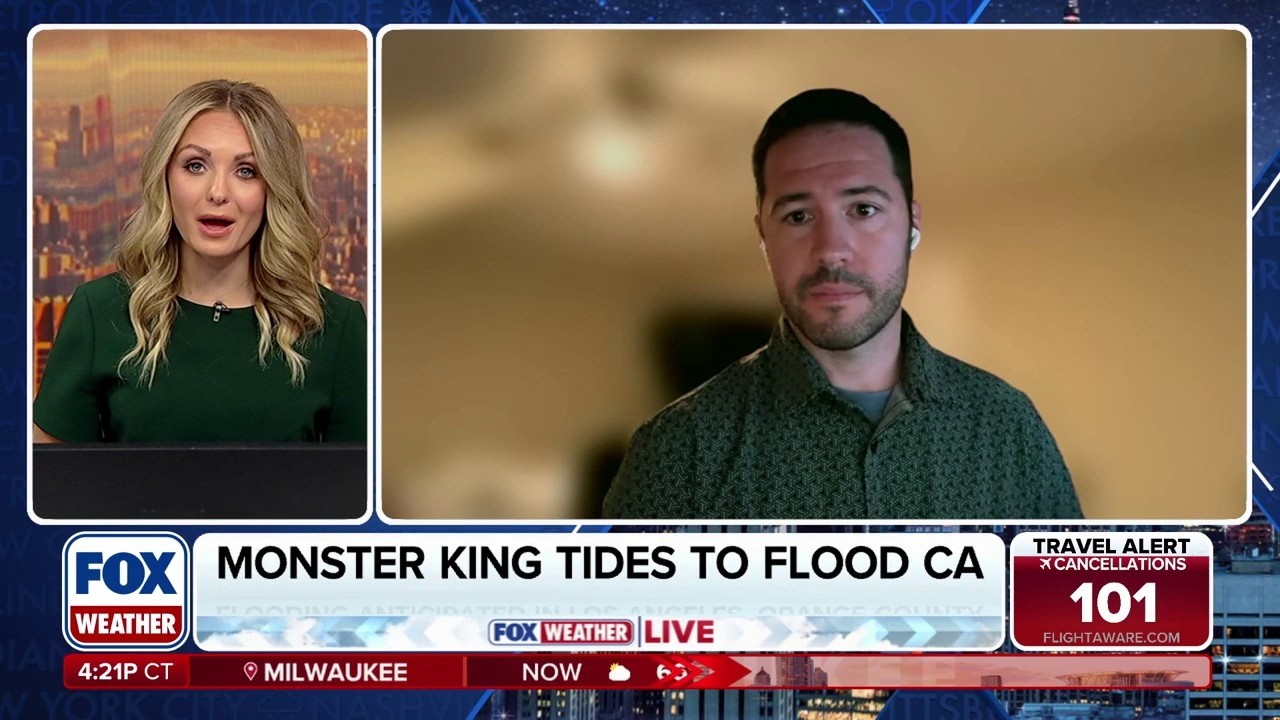 Monster King Tides Return to the West, Threatening Coastal Communities Ahead of Thanksgiving
Up nextTrari.com home page ›


 FOX Weather
Story of
No. 88 on the daily chartNo. 5 on the Science chart
Why this story? The video opened at a pace of 618,517 views a day, 26 times a normal first day on this channel (24,120).
The moon helps set the dates. How far the water comes up the beach is another question. On FOX Weather, North Carolina State University researcher Dillon Amaya explained what could make the Thanksgiving king tides more troublesome for Southern California than the tide calendar alone would suggest.
In "Monster King Tides Return to the West, Threatening Coastal Communities Ahead of Thanksgiving", Amaya starts with the alignment of the sun, Earth and moon. High tides can reach higher still when the moon is near its closest point to Earth, known as perigee. The forecast graphic marks the Thanksgiving stretch, with more king tides expected around Christmas and again in late January.
El Niño adds a different ingredient. During a strong event, waves known as Kelvin waves can travel across the Pacific and raise sea levels along the coast. That leaves less room for tides and storm surf before water reaches places that usually stay dry. As Amaya puts it, "Kelvin waves by themselves don't cause the flooding, they just make it more likely." For residents and business owners, he points to local emergency managers and National Weather Service forecasts.
The interview drew far more views than a regular FOX Weather upload usually does on its first day. The channel also had a strong start for "A Week Of Florida Flood Coverage Wraps Up", a look back at days of heavy rain on the other side of the country.
A public research university in Raleigh, North Carolina, and part of the University of North Carolina system.
More on Wikipedia ›The warm phase of a recurring climate pattern in the tropical Pacific. Changes in ocean surface temperatures there can affect climate far beyond the tropics.
More on Wikipedia ›The U.S. federal agency that issues public weather forecasts and warnings about hazardous conditions.
More on Wikipedia ›Published on Trari.com
Go back to Trari.com home page
Where next?
Things we can learn from the video
Press to jump
- 0:43Amaya explains how lunar alignment and perigee boost tides, with high-water windows from Thanksgiving through late January.
- 1:10El Niño and Kelvin waves can raise coastal water levels, making floods more likely without causing them on their own.
- 2:38Amaya explains how gently sloping California beaches can let storm water run farther inland and increase erosion.
- 3:22Kelvin waves can cross the Pacific during strong El Niño events and travel along the coast.
- 5:11Amaya urges residents and business owners to follow local emergency managers and National Weather Service forecasts.
What viewers say
Something I never see discussed is the science behind how beaches are formed.
@mamalor13See it on YouTubealso, warmer water expands
@MotorCityMadhouseeBaySalesOnlySee it on YouTubeGreat pacing and editing.
1 more comment
Be safe yall🙏
@michellejessup6618See it on YouTube
Public comments from the video's page on YouTube
Want to know when somebody answers you?
 For the channel's owners and team
Share the story with your audience
A ready picture for an Instagram story or a WhatsApp status.
Ready text for a community post
- Channel
- FOX Weather
- Subscribers
- 1,090,000
- Channel views, last 7 days
- 4,805,218
- Channel views, pace per day
- 1,204,454 (on a normal day: 692,132)
- Video published
- November 22, 2026
- Video views so far
- 665,530 (less than a day online)
- Video views, pace per day
- 661,471
The numbers
The king tide interview drew well over twenty times the usual first-day views for a regular FOX Weather video. The Florida flood recap also ran well ahead of that usual pace.

💡 Test your knowledge
What is the name for the point in the moon's orbit closest to Earth?
Perigee is the point at which the moon is closest to Earth in its orbit.