
 United States
 United Kingdom
 Canada
 Australia
 New Zealand
 Ireland
Navarro's China warning raises North American trade risks for Carney
Business analyst Ian Lee welcomes lower tariffs but questions relief for Chinese metals and the export opportunities available to Canadian firms.
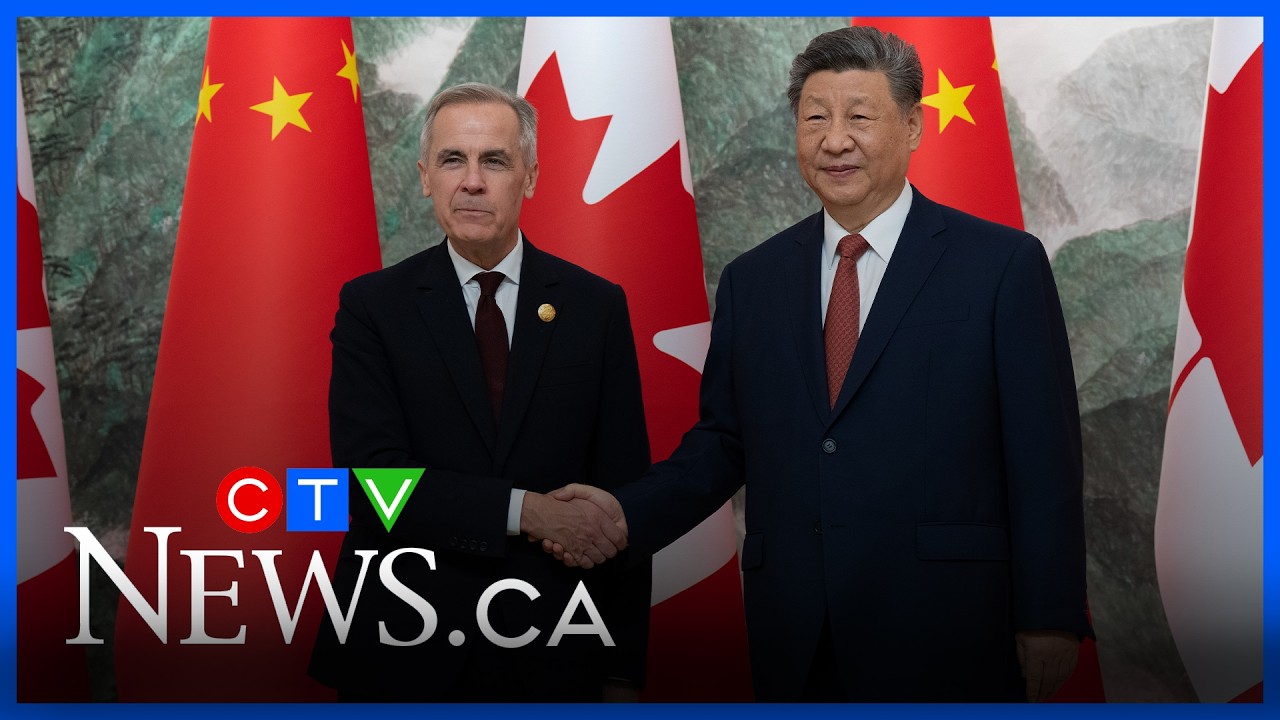 Trump adviser aims criticism at Carney over China deal
Up next


Why this story? One of CTV News's most watched videos since yesterday, with 52,417 views.
CTV News: The news division of CTV, a Canadian television network owned by Bell Media. 2.4M subscribers and 3.4B views.
5 more stories on Canada–China tariff relief agreement ›
Things we can learn from the video
Press to jump
- 0:00The anchor introduces Navarro's criticism of Carney over potential auto trade expansion with China.
- 0:37Lee welcomes lower tariffs for consumers but sees Navarro's intervention as a warning for CUSMA negotiations.
- 1:52Lee cites repeated steel-dumping findings and questions easing restrictions on Chinese metals.
- 2:40The anchor says defense, critical minerals and AI technology are excluded; Lee stresses why those boundaries matter.
- 4:32Lee argues China's import-substitution policies limit export opportunities for smaller Canadian businesses.
Peter Navarro's criticism of Canada's opening to China could signal trouble for future North American trade negotiations, business analyst Ian Lee argues, even as he sees benefits for consumers in lowering tariffs.
Canada's CTV News opens its report with a social media post from Donald Trump's adviser challenging Prime Minister Mark Carney over potential auto trade expansion with Beijing. The interview then examines a broader question: which parts of closer trade with China make economic sense, and which could carry costs elsewhere?
"Anytime we negotiate tariffs down, this is a good thing for consumers," says Lee, a Carleton University business analyst speaking from Ottawa. He also recognizes the appeal of diversifying Canada's export markets. But he interprets Navarro's intervention as a warning of more difficult negotiations over CUSMA, the trade agreement linking Canada, the United States and Mexico.
Chinese steel and aluminum draw a more skeptical response. Asked about reports that Canada is easing import restrictions, Lee points to repeated findings by Canadian, American and European authorities that China has dumped steel. He questions the strategy of granting relief in that sector rather than treating all tariff reductions as equally beneficial.
The anchor says defense, critical minerals and artificial intelligence technology are excluded from the talks. Lee considers those boundaries essential because of Washington's perception of China as a security threat. His argument is that Ottawa must consider not only what it intends to trade, but how American officials will interpret the relationship.
For smaller Canadian businesses, Lee is also cautious about the promise of trade missions and access through platforms such as Alibaba. He argues that China's policy of replacing imports with domestic production, combined with its formidable manufacturing capacity, limits the opportunities. Lower barriers, in his assessment, do not automatically mean a receptive market for Canadian exports.
An American economist serving as Donald Trump's senior counselor for trade and manufacturing since January 2025.
More on Wikipedia ›Canada's prime minister and Liberal Party leader since 2025. He previously headed the Bank of Canada and the Bank of England.
More on Wikipedia ›Published on Trari
Where next?
What do you think?
Want to know when somebody answers you?
- Channel
- CTV News
- Subscribers
- 2,430,000
- Channel views, last 7 days
- 27,736,458
- Channel views, pace per day
- 5,073,171 (on a normal day: 3,223,983)
- Video published
- November 17, 2026
- Video views so far
- 52,417 (less than a day online)
- Video views, pace per day
- 91,574
The numbers
The report drew about 52,000 views since yesterday, placing it among Canada's most-watched new news videos.

💡 Test your knowledge
Which country joins Canada and the United States in CUSMA?
CUSMA is the Canada-United States-Mexico Agreement.