
 United States
 United Kingdom
 Canada
 Australia
 New Zealand
 Ireland
Brazil's violent storms followed extreme heat and a cold front
Meteorologist Alexandre Nascimento explains the destructive winds and distinguishes tornadoes from microbursts after storms hit southern and southeastern Brazil.
 BrazilStory of
Why this story? One of CNN Brasil's most watched videos since yesterday, with 176,659 views.
CNN Brasil: A Brazilian news channel on air since 2020 under a CNN licence. 7.3M subscribers and 6.1B views.
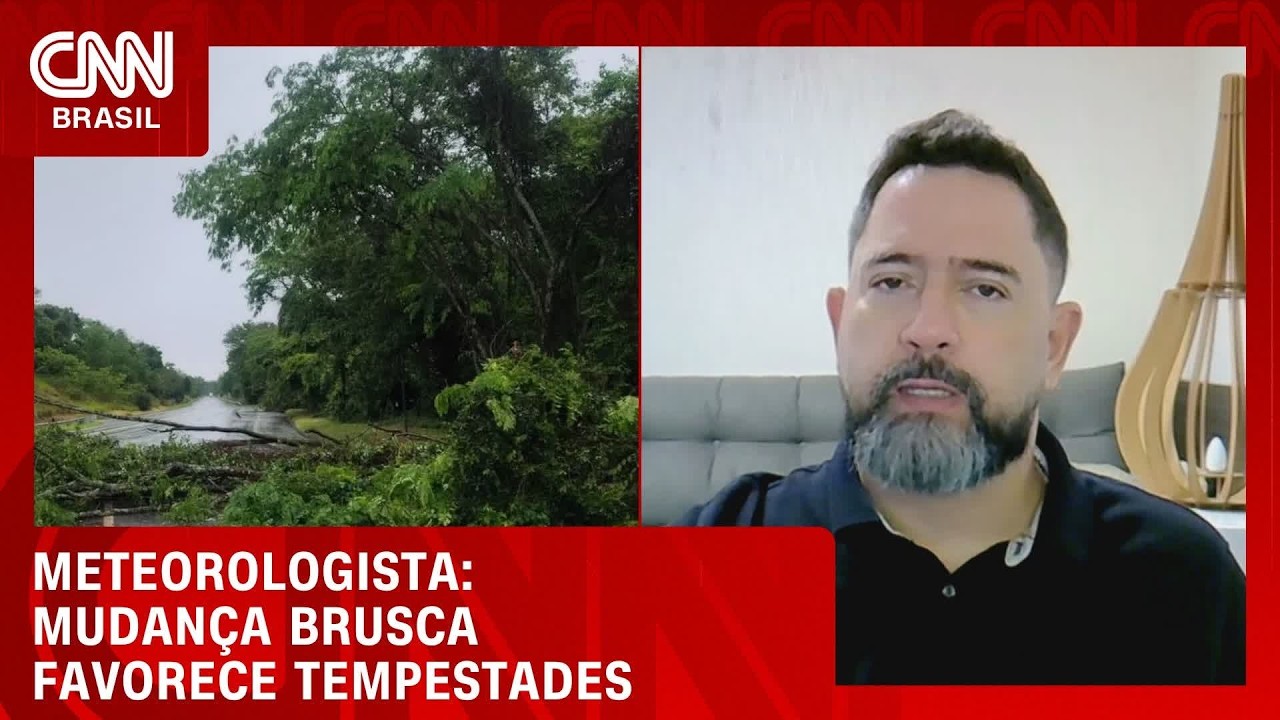 Clima extremo: mudança brusca favorece tempestades, explica especialista | CNN AGORA
Things we can learn from the video
Press to jump
- 0:46Nascimento links severe storms to a cold front, an extratropical cyclone and preceding extreme heat.
- 1:07Amateur footage shows flooded streets, strong winds and storm damage across Brazilian cities.
- 3:10He attributes increasingly frequent and intense severe weather to climate change.
- 4:50Microbursts drive air downward from storm clouds, producing destructive winds as it spreads across the ground.
- 6:12Sunday's forecast brings reduced extreme-storm risk in São Paulo, but continued rain, cooling and regional warnings.
Flooded streets, powerful winds and storm damage fill the footage as meteorologist Alexandre Nascimento explains how extreme heat gave way to violent weather across parts of Brazil.
Speaking to Brazil's CNN Brasil, the Nottus meteorologist links the storms to a cold front forming alongside an extratropical cyclone after a period of intense heat. That combination, he explains, helped produce towering storm clouds and strong gusts. The broadcaster reports winds reaching 126 kilometers per hour in Cachoeira Paulista, in São Paulo state.
The interview follows Saturday's storm and wind damage in Rio de Janeiro and other parts of the state. Anchor Carol also asks about microbursts recorded in Cachoeira Paulista and reports of tornadoes in southern Brazil.
Nascimento distinguishes the two phenomena. A tornado involves a rotating column of air, while a microburst sends an intense mass of air downward from a storm cloud, spreading destructive winds when it reaches the ground. A broad swath of wind damage does not necessarily mean a tornado passed through.
He attributes increasingly frequent and intense severe weather to climate change, and describes El Niño as an additional influence on this year's conditions. El Niño is the warming phase of a recurring tropical Pacific climate pattern that affects weather far beyond the ocean itself.
The closing forecast is specifically for Sunday, November 8, when students were due to take ENEM, Brazil's national exam used for university admissions. Nascimento says São Paulo's risk of extreme storms had decreased, but warns that rain and falling temperatures would continue. His remaining areas of concern include the São Paulo coast, Minas Gerais and Rio de Janeiro.
A municipality in Brazil’s São Paulo state, in the Vale do Paraíba e Litoral Norte metropolitan region.
More on Wikipedia ›A state in southeastern Brazil with an Atlantic coastline. Its capital, also called São Paulo, is Brazil’s most populous city.
More on Wikipedia ›Brazil’s voluntary, standardized national exam assessing high school students.
More on Wikipedia ›A state in southeastern Brazil and the country’s second most populous. It borders both São Paulo and Rio de Janeiro states.
More on Wikipedia ›Published on Trari
Where next?


- Channel
- CNN Brasil
- Subscribers
- 7,260,000 ▲ 20,000 this week
- Channel views, last 7 days
- 58,457,367
- Channel views, pace per day
- 5,018,073 (on a normal day: 13,267,105)
- Video published
- November 8, 2026
- Video views so far
- 176,659 (less than a day online)
- Video views, pace per day
- 222,784
The numbers
The interview drew about 177,000 views since yesterday, placing it among Brazil's most watched new news videos.
