
 United States
 United Kingdom
 Canada
 Australia
 New Zealand
 Ireland
CNN's Nvidia coverage turns to security warnings and chip controls
The resignation report examines Huang's White House access, while a later CNN update says US intelligence remains unsure about the alleged espionage connection.
 CNN
Story of
No. 13 on the daily chartNo. 4 on the Tech chart
Why this story? One of CNN's most watched videos since yesterday, with 1,556,732 views.
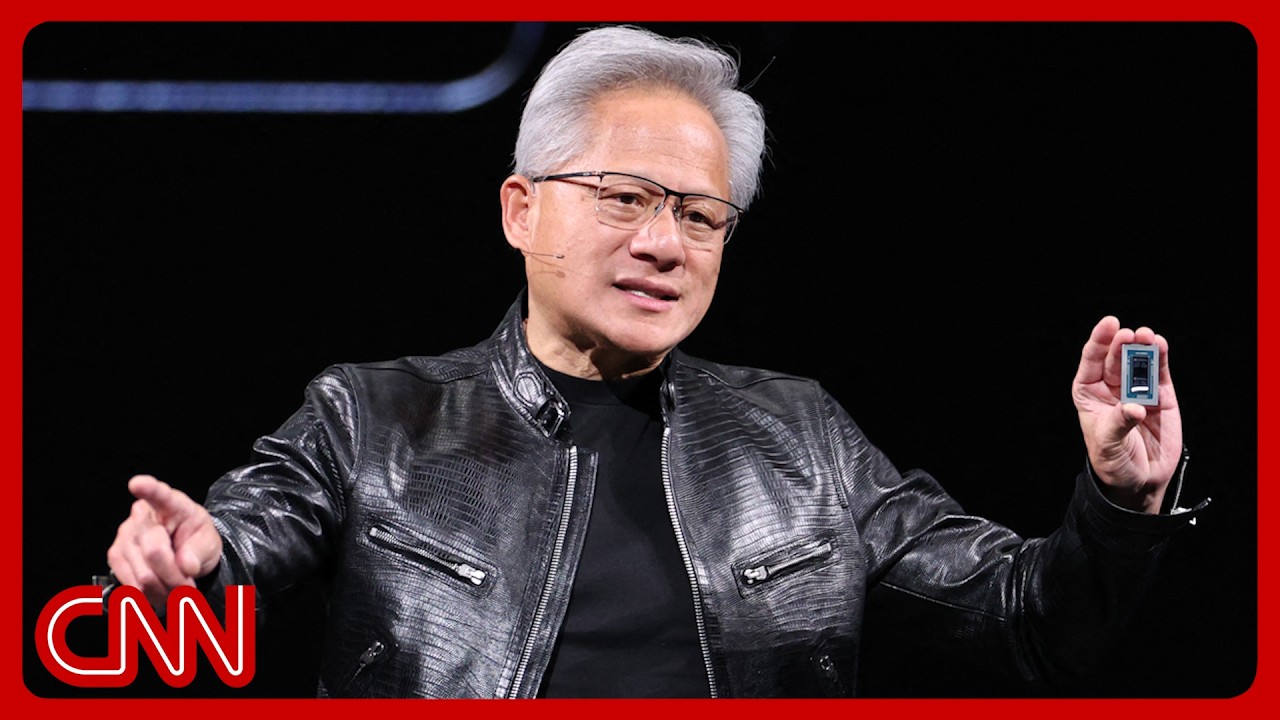 Nvidia CEO Jensen Huang resigns, Nvidia stock plunges
Next story: Dolan Darkest wants Nvidia's drama to mean cheaper graphics cards
39 more stories on Nvidia's Jensen Huang investigation ›
Things we can learn from the video
Press to jump
- 1:38CNN reports that finance chief Colette Kress will serve as interim CEO during the search for Huang's successor.
- 4:04Alayna Treene describes Huang's advisory relationship with Trump and his access to senior administration officials.
- 6:33Treene outlines administration disputes over advanced-chip export controls.
- 8:09Paul Mozur argues that Huang's central role in AI hardware makes Nvidia's leadership transition unusually consequential.
- 10:36Mozur asks why US officials did not intervene earlier with a defensive intelligence briefing for Huang.
Did US officials miss an opportunity to warn Jensen Huang about a potential intelligence threat? That is one of the questions New York Times technology correspondent Paul Mozur raises in CNN's coverage of the Nvidia chief's resignation.
The broadcast goes beyond the leadership change to examine Huang's access to President Donald Trump and the administration's handling of advanced-chip exports. CNN correspondent Alayna Treene describes his advisory relationship with Trump, including Oval Office visits and travel briefings involving Secretary of State Marco Rubio.
CNN reports that Huang resigned effective immediately and that finance chief Colette Kress became interim CEO while the board searches for a permanent successor. An announcement displayed during the segment also names Harvey C. Jones as the company's first-ever board chair.
For Mozur, the difficulty of replacing Huang extends beyond filling an executive position. He describes the founder as central to Nvidia's identity and the AI hardware industry. Journalist Garrison Lovely connects the company's influence to wider questions about chip distribution and White House AI policy.
The espionage allegations discussed in the broadcast remain unresolved. In a subsequent upload, CNN reports that US intelligence officials are still trying to establish whether the woman at the center of those allegations had connections to China's state security services.
The resignation broadcast drew about 1.6 million views since yesterday. CNN's follow-up reporting shifts the unanswered question from who will run Nvidia to what US officials knew about a possible security threat.
Taiwanese-American engineer and businessman who co-founded Nvidia in 1993 and led it as president and CEO until his resignation in November 2026.
More on Wikipedia ›American technology company that develops graphics processors and other computing technology for uses including gaming, artificial intelligence and high-performance computing.
More on Wikipedia ›US secretary of state since 2025 who also serves as national security advisor. A Republican, he previously represented Florida in the US Senate.
More on Wikipedia ›American business executive who became Nvidia's interim CEO on November 12, 2026, following co-founder Jensen Huang's resignation.
More on Wikipedia ›Published on Trari
More on Nvidia's Jensen Huang investigation


Where next?


What do you think?
 Is this your channel?For the channel's owners and team: a ready picture and text for your audience
Share the story with your audience. Everything is ready:
For an Instagram story or a WhatsApp status
For a community post or your channel's description
- Channel
- CNN
- Subscribers
- 20,100,000 ▲ 100,000 this week
- Channel views, last 7 days
- 188,593,041
- Channel views, pace per day
- 32,512,146 (on a normal day: 27,864,793)
- Video published
- November 12, 2026
- Video views so far
- 1,556,732 (less than a day online)
- Video views, pace per day
- 2,072,184
The numbers
CNN's resignation broadcast was its second most-watched new video since yesterday, drawing about 1.6 million views.
