
Brian Tyler Cohen's early-vote interview looks beyond Virginia
Elliott Morris sees signs of Democratic strength, but explains why one state's turnout cannot tell the whole national story.
 Brian Tyler Cohen News
Story of
Why this story? The video opened at a pace of 203,899 views a day, 12 times a normal first day on this channel (17,182).
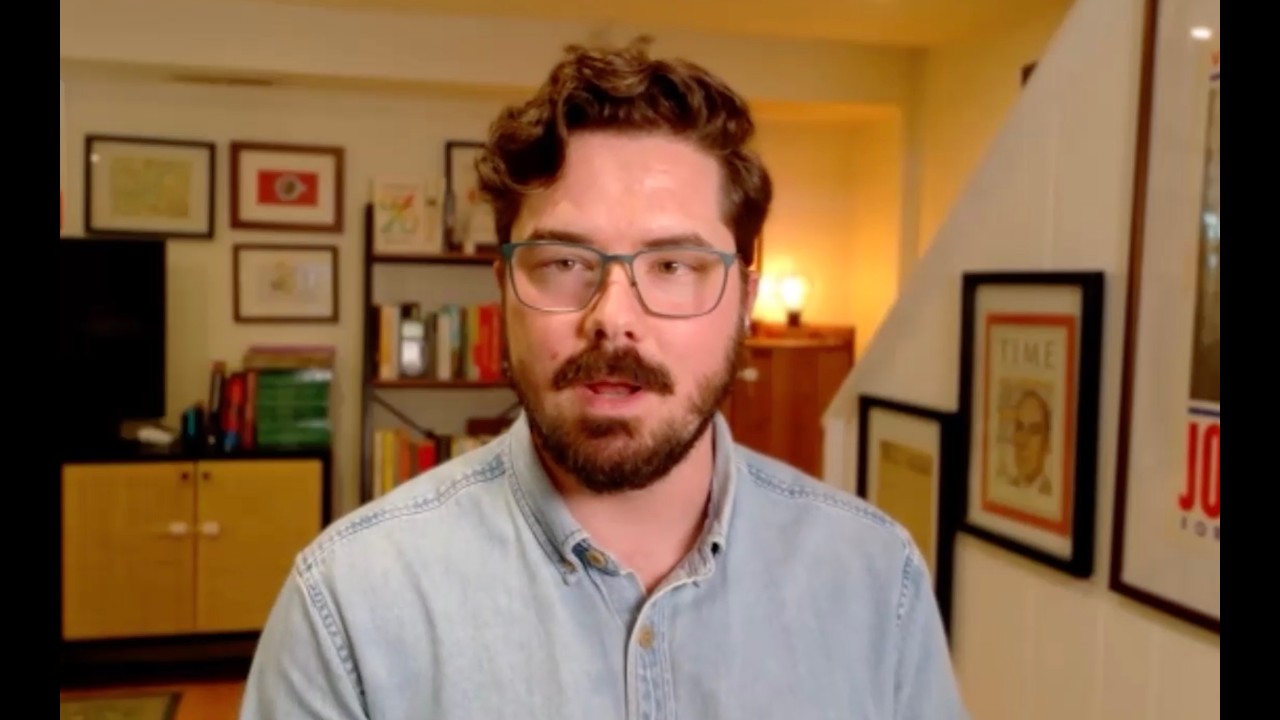 Data journalist gives early vote update in key states
Things we can learn from the video
Press to jump
- 0:40Morris identifies strong initial Democratic early-voting engagement in Virginia, Pennsylvania and North Carolina.
- 3:09Virginia's federal workforce makes it distinctive, limiting how directly its early turnout can be extrapolated nationally.
- 4:23Florida remains unfavorable for Democrats in Morris's assessment, despite encouraging signals elsewhere.
- 6:15Morris explains how election forecasting accounts for previous polling inaccuracies.
- 11:08Combining mail and in-person early voting gives a fuller picture than comparing either method alone across elections.
- 13:19Morris says the national indicators suggest a possible Democratic wave comparable to 2006 or 2018.
Virginia offers an encouraging early-voting picture for Democrats. Brian Tyler Cohen wants to know how far that picture travels.
In "Data journalist gives early vote update in key states," journalist Elliott Morris gives an answer with some important distinctions. Virginia's federal workforce makes its political circumstances distinctive, he says, so the state is not a simple stand-in for the country. He nevertheless identifies similar Democratic shifts in Pennsylvania and North Carolina.
The interview drew an estimated 204,000 views in its first day, far beyond the usual start for a regular video on Brian Tyler Cohen News. It arrives alongside a broader jump in the channel's daily views, which are more than five times their usual level.
Morris, who writes the Strength in Numbers newsletter, also explains a trap in reading early returns: comparing mail ballots or in-person voting separately with previous elections can obscure the bigger picture. His approach is to combine early-voting methods rather than mistake a change in how people cast ballots for a change in turnout.
That distinction doesn't stop him from offering a strong political assessment. He says the wider evidence points toward a possible Democratic wave, drawing comparisons with 2006 and 2018. But he does not describe every state as equally promising for Democrats: Florida remains unfavorable in his analysis.
Cohen also asks about distrust of polls. Morris explains how forecasting accounts for past polling errors, then looks to campaign spending decisions as another indicator, including Republican efforts to defend seats in Texas and Kansas. The interview's central idea is to read those signals together, rather than let a single striking turnout report carry the forecast.
Published on Trari
Where next?



 Is this your channel?For the channel's owners and team: a ready picture, text and badge for your audience
Share the story with your audience. Everything is ready:
For an Instagram story or a WhatsApp status
For a community post or your channel's description
For your website

You may use the picture, the badge, and link it to this story.
- Channel
- Brian Tyler Cohen News
- Subscribers
- 308,000 ▲ 2,000 this week
- Channel views, last 7 days
- 1,465,377
- Channel views, pace per day
- 781,921 (on a normal day: 150,266)
- Video published
- October 20, 2026
- Video views so far
- 269,936 (2 days online)
- Video views, pace per day
- 249,546
The numbers
The early-voting interview had an unusually strong first day. The channel's overall daily views also rose sharply.

💡 Test your knowledge
What is the name of Elliott Morris's newsletter?
Morris writes Strength in Numbers, the newsletter identified in Cohen's interview.