
 United States
 United Kingdom
 Canada
 Australia
 New Zealand
 Ireland
Kraków surgeon describes treating victims and shooting suspect alike
In a BBC News interview, Professor Michał Pędziwiatr explains the urgent street-side care and credits a wounded police officer with confronting the gunman.
 BBC News
Story of
Why this story? One of BBC News's most watched videos since yesterday, with 279,771 views.
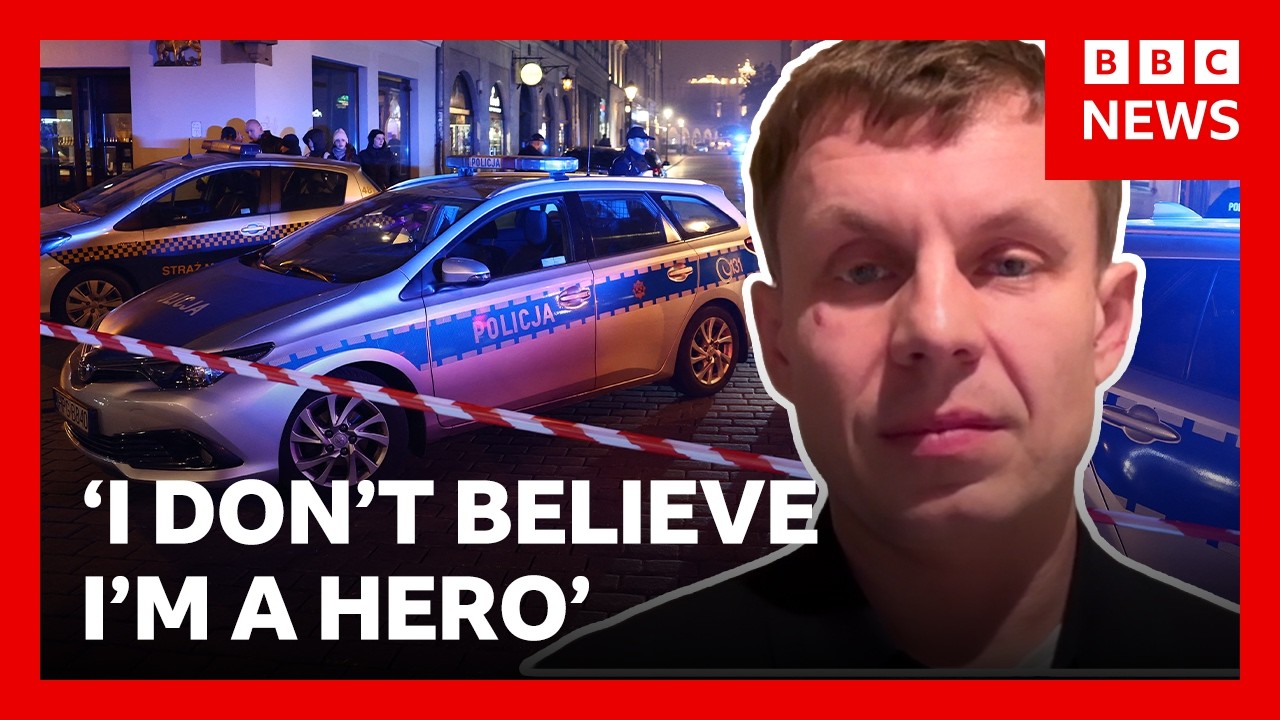 Doctor who treated victims and suspect of Krakow shooting speaks | BBC News
Things we can learn from the video
Press to jump
- 0:28Pędziwiatr says he left dinner with his family and a colleague to help at the shooting scene.
- 1:29Immediate care focused on assessing injuries and controlling bleeding before ambulance support arrived.
- 2:06His colleague applied direct pressure to a wounded officer's chest to control bleeding before transport.
- 2:42The surgeon explains that urgent medical need, not whether someone was a victim or suspect, determined treatment.
- 3:19He rejects the hero label and credits the wounded police officer who confronted the suspect.
- 5:53Pędziwiatr describes the emotional difficulty of processing the traumatic event.
"It doesn't matter to me if it's a victim or a suspect," Professor Michał Pędziwiatr tells the BBC. For the trauma surgeon who rushed from dinner to help after the Kraków shooting, the distinction was not part of the immediate medical task.
Pędziwiatr says he was eating with his family and a colleague when the shooting began near the city's Main Market Square. The two doctors went to help before emergency services arrived. According to the BBC's report, six people were killed and 15 injured in Saturday's attack.
His account brings the emergency down to the work that could be done on the pavement: assessing injuries, controlling bleeding and preparing wounded people for transport. He describes his colleague applying direct pressure to an injured police officer's chest. The pair treated wounded officers and the suspect.
Asked about caring for the suspected attacker, Pędziwiatr explains that everyone needing urgent help was a patient. Deciding what should happen to the suspect afterwards was not the doctors' task.
He also rejects the suggestion that he is a hero. "I don't believe I'm a hero. I was just doing what I trained to do," he says. Instead, he credits the wounded officer who confronted the gunman: "That's the hero for me, and I was just saving the hero."
Later in the interview, Pędziwiatr describes the emotional difficulty of processing what happened, beyond the immediate demands of treating the injured.
A mass shooting at the Main Square in Kraków, Poland, on 7 November 2026. The gunman fired from a car, killing six people before being shot by police.
More on Wikipedia ›Published on Trari
Where next?


 Is this your channel?For the channel's owners and team: a ready picture and text for your audience
Share the story with your audience. Everything is ready:
For an Instagram story or a WhatsApp status
For a community post or your channel's description
- Channel
- BBC News
- Subscribers
- 20,300,000 ▲ 100,000 this week
- Channel views, last 7 days
- 40,151,433
- Channel views, pace per day
- 6,238,396 (on a normal day: 5,254,446)
- Video published
- November 8, 2026
- Video views so far
- 331,432 (2 days online)
- Video views, pace per day
- 279,722
The numbers
The BBC News interview drew about 280,000 views since yesterday, the most among the channel's videos published over the past two days.
