
 United States
 United Kingdom
 Canada
 Australia
 New Zealand
 Ireland
Arjay McCandless gives three small databases one big budget
The week's most-watched upload puts PostgreSQL through a blogging benchmark where even loading the homepage can expose the cost of splitting up the work.
 One Big Database or Three Small Ones?
Up nextTrari.com home page ›


 Arjay McCandless
Story of
Why this story? The channel's weekly summary: what went up this week, what is drawing views now, and where the channel stands among similar channels.
Arjay McCandless makes the homepage do a surprising amount of work in "One Big Database or Three Small Ones?" In his Conduit blogging benchmark, splitting the data across smaller PostgreSQL databases means a request for a list of posts can send several databases off to look for answers. That extra work helps explain why one big Postgres instance handled far more simulated users in the read-heavy test. The video was his most-watched of the week, with about 48,000 views.
The gap narrows as McCandless adds more writes. Sharding finally comes out ahead in a test with random reads, data too big for one machine's memory, and disk access deliberately slowed down. The comments picked up on a distinction that raw speed doesn't settle: replicas can give you somewhere to turn if the primary database fails. Others asked for a future comparison with ClickHouse and DuckDB.
McCandless found a less conventional job for Postgres in "I replaced my backend with Postgres?" He runs the entire backend of a multiplayer fishing game, Fishgres, inside the database. A small Rust web server takes the cast from the browser, and a SQL function sets the timing of the bite. Viewers get to see the bobber move rather than just look at another chart.
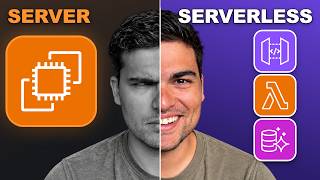
The charts return in "Server vs Serverless: Which is actually cheaper?", which includes a sponsored segment. On AWS, McCandless finds that Aurora Serverless v2 can cost more than keeping an EC2 instance running even at light traffic. Switching to DynamoDB changes the bill, and intermittent bursts make a better case for serverless than a steady stream of requests does. That upload is drawing views fastest right now, with the older "Deploying a Vector Database" close behind.
Subscribers held steady and daily views are below McCandless's usual pace, though his weekly view gain was the largest among the similarly sized tech channels in this group. Andrew Codesmith added subscribers, and Oliur Online is having a much busier day than usual. McCandless also used the Postgres benchmark to announce Advent of System Design, a daily challenge series for December.
Published on Trari.com
Go back to Trari.com home page
Where next?
Things we can learn from the video
Press to jump
- 0:36One large Postgres instance and three smaller ones share the same total CPU and memory budget.
- 2:49The single instance handles the most simulated users in the read-heavy blogging test.
- 4:14Homepage and list queries reach across shards, adding work that the single instance doesn't have to do.
- 5:16More writes narrow the gap as locking in the single instance's write-ahead log limits throughput.
- 9:00Sharding pulls ahead with random reads when the data exceeds one node's memory and disk access is throttled.
- 11:27Multiple nodes offer fault-tolerance benefits, but McCandless recommends scaling up before splitting the database.
A professional in this field? Want to write about Tech on Trari? Tell us ›
What viewers say
Big Postgres: Look what they need to mimic a fraction of our power
@jfolzSee it on YouTubeThe replicas give you redundancy and if they are cross server (better yet cross datacenter) then if one server has a massive failure, you can switch who is the writer/leader.
@AxioMATlCSee it on YouTubeI would love to see a database comparison video. I've seen some pretty insane benchmarks from dbs like clickhouse and duckdb. I wonder how cherry picked those results are?
@whatsacrateSee it on YouTube
4 more comments
Thank you. In my day job I’m literally trying to weigh when to start sharding versus just vertical scaling. These simulations are what I’ve been doing the last 2 weeks
@jonathanschober1032See it on YouTubeGreat video and super clear methodology! For a future experiment, it would be awesome to see how open-source Postgres stacks up against proprietary Postgres-compatible cloud engines (like AWS Aurora or Google AlloyDB) on the exact same instance sizes. Also, I'd love to see a showdown on sharding architectures: proprietary managed sharding vs. open-source solutions like Citus, SPQR, or PgDog!
@RafaelGWinterSee it on YouTubeBanger content!!
Would love to see how this compares to something like Multigres 👀@ClementOhSee it on YouTubethis guy doesn't know how to stop. Just keeps putting out banger videos
@sandipanhaldar6333See it on YouTube
Public comments from the video's page on YouTube
Want to know when somebody answers you?
 For the channel's owners and team
Share the story with your audience
A ready picture for an Instagram story or a WhatsApp status.
Ready text for a community post
The videos drawing views on Arjay McCandless right now


- Channel
- Arjay McCandless
- Subscribers
- 138,000
- Channel views, last 7 days
- 473,578
- Videos published this week
- 3
- Video published
- November 24, 2026
- Video views so far
- 47,768
- Views on its first day
- 31,775
The numbers
Here are Arjay McCandless's weekly views, subscriber change, and upload figures.

💡 Test your knowledge
Which language does Arjay McCandless use for the web server inside Fishgres?
McCandless wrote a Postgres extension that starts a small Rust web server inside the database.